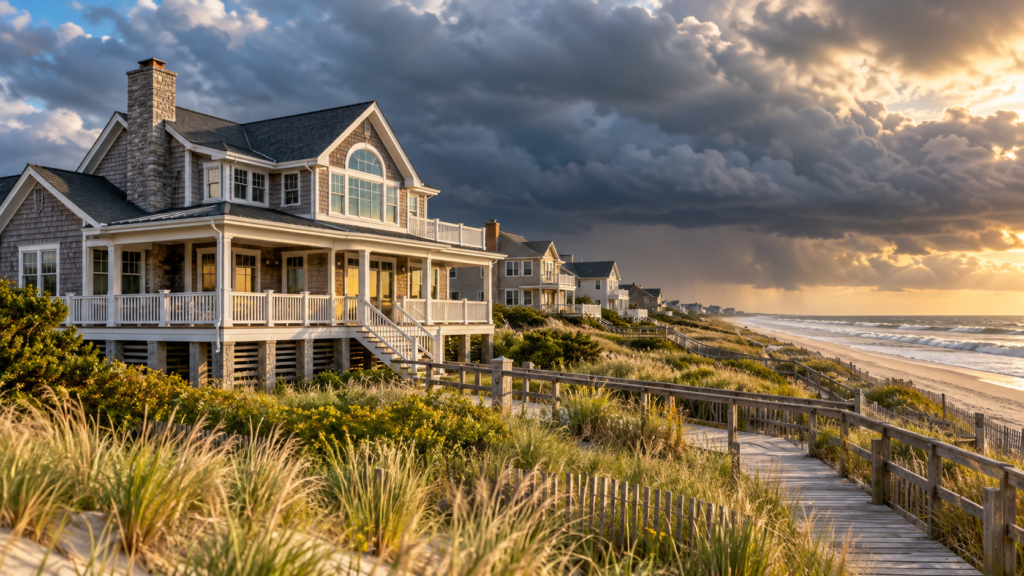
Insuring a coastal home in New Jersey is not always the same as insuring a primary residence inland. Proximity to the ocean, wind exposure, flood risk, seasonal occupancy, rental use, and carrier underwriting guidelines can all affect which insurance markets are available and how the coverage should be structured.
Coastal properties can fall outside standard homeowners underwriting
Some insurance companies that are comfortable insuring homes throughout Pennsylvania or inland New Jersey may restrict or decline properties located near the coast. Distance from the shoreline, wind exposure, construction type, roof age, elevation, and prior losses can all affect eligibility.
That means the best coastal insurance solution may come from a different carrier or coverage structure than the one used for your primary home.
Wind and hurricane exposure can change the deductible
Coastal policies may include separate wind, named-storm, or hurricane deductibles. These deductibles can be percentage-based rather than a flat dollar amount, which can materially change what you would pay out of pocket after a major storm.
A policy with an attractive premium can become much less attractive if the storm deductible is not understood before a loss.
Flood insurance is separate from homeowners insurance
Coastal homeowners should not assume their homeowners policy covers flooding. Damage caused by rising water, storm surge, or other flood events generally requires separate flood insurance.
Depending on the property, flood coverage may be available through the National Flood Insurance Program or the private flood market. The right option can depend on the home’s location, elevation, replacement cost, contents exposure, and how the property is used.
Secondary homes and rentals can create additional underwriting issues
Many New Jersey shore properties are not occupied year-round. Some are secondary homes, seasonal residences, or properties that are rented for part of the year. Those details matter because carriers can have very different guidelines for vacancy, seasonal occupancy, short-term rentals, and tenant exposure.
A policy designed for a full-time primary residence may not be appropriate for a shore property that sits vacant for extended periods or generates rental income.
The carrier that insures your primary home may not be the best coastal market
Coastal insurance often requires a broader view of the market. A company that provides excellent coverage and pricing for your primary residence may have limited appetite near the coast, while another carrier may specialize in coastal or secondary-home risks.
Working independently makes it possible to compare available markets rather than trying to force the coastal property into the same insurance company simply for convenience.
Review the entire coastal insurance strategy
A strong coastal insurance program should consider the homeowners policy, wind or storm deductibles, flood insurance, property use, occupancy, liability exposure, and any rental activity together.
The goal is not simply to find a policy that will issue on the property. It is to understand how the different pieces work together before a storm or claim exposes a gap.
Need help reviewing insurance for a New Jersey coastal or secondary home?