FLOOD INSURANCE · NEW JERSEY + PENNSYLVANIA
Flood insurance built around the property, location, and water exposure behind the risk.
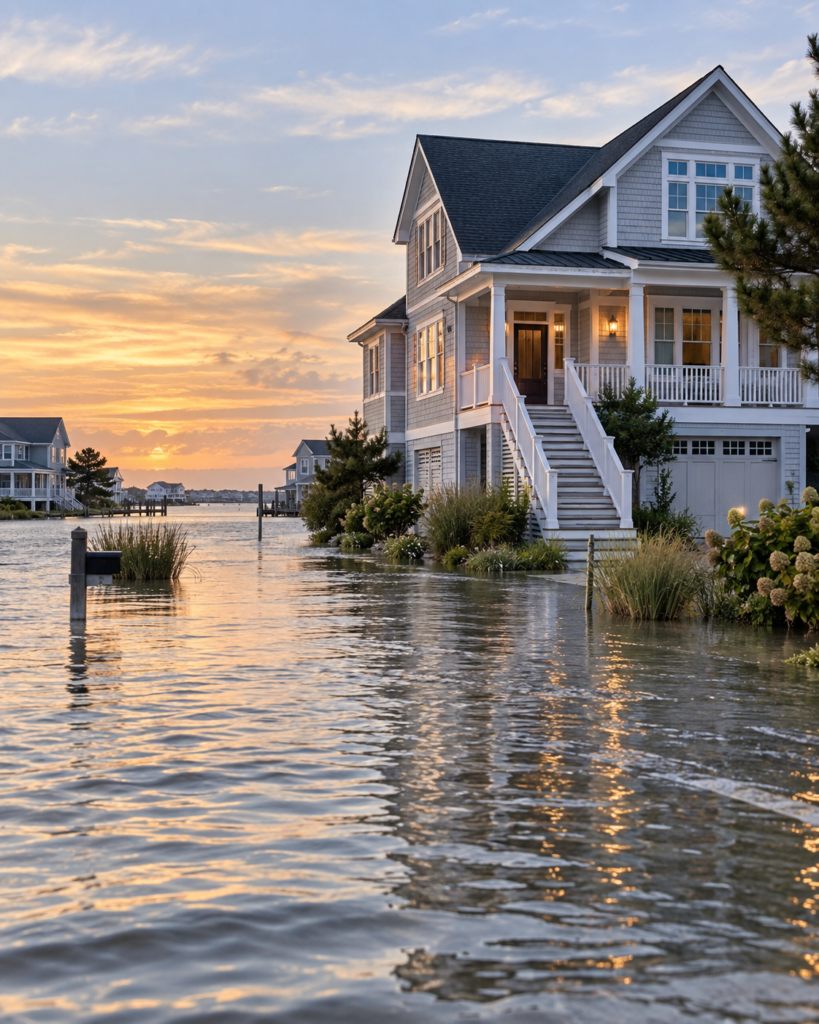
Flood damage is generally not covered by a standard homeowners policy. Coastal exposure, elevation, flood zone, building construction, occupancy, foundation type, replacement value, and the amount of building and contents coverage needed can all affect how the right flood policy should be structured.
WHAT FLOOD INSURANCE NEEDS TO ADDRESS
Start with the property and belongings a flood could put at risk.
BUILDING COVERAGE
Protect the structure itself.
Flood building coverage can help protect covered structural components of the home or building when direct physical damage is caused by a qualifying flood event, subject to the policy terms and limits.
CONTENTS COVERAGE
Protect what you keep inside.
Contents coverage can help protect covered personal property, furnishings, appliances, and other belongings damaged by flood, subject to applicable limits and policy provisions.
COVERAGE STRUCTURE
Make sure the limits fit the property.
Building value, contents, occupancy, foundation, elevation, deductibles, lender requirements, and available flood markets all need to be considered together.
WHERE FLOOD COVERAGE GETS MORE SPECIFIC
The flood zone is important. It isn’t the whole story.
Two homes on the same street can need very different flood insurance. Elevation, foundation type, distance from water, prior losses, occupancy, building value, flood-zone designation, lender requirements, and available private flood or NFIP options can all affect coverage and pricing.
Request a Flood Insurance Review →Being outside a high-risk flood zone does not mean there is no flood exposure.
Heavy rainfall, drainage problems, overwhelmed storm systems, tidal water, and changing conditions can cause flooding outside areas typically associated with the highest flood risk.
Coastal properties create additional considerations.
Elevation, pilings, crawlspaces, enclosures, proximity to water, seasonal occupancy, and construction characteristics can materially affect flood underwriting and available options.
Flood and water backup are not the same coverage.
Flood insurance and water-backup coverage address different causes of loss. A complete property review should consider both rather than assuming one automatically replaces the other.
BUILT AROUND THE PROPERTY
Two properties can be close together and still need very different flood insurance.
Location, elevation, flood zone, foundation, occupancy, property value, contents, lender requirements, and available markets can all change what the right flood program looks like.
01
Primary Homes
Primary residences can require flood coverage structured around building value, contents, mortgage requirements, and the way the home is occupied year-round.
02
Coastal & Shore Homes
Properties near the coast may require closer review of elevation, foundation, tidal exposure, construction, and seasonal occupancy.
03
Secondary & Vacation Homes
Second homes and seasonal properties can present different occupancy, contents, valuation, and underwriting considerations.
04
Flood Zones & Elevation
Flood-zone designation, elevation information, maps, foundation type, and property-specific characteristics can materially affect pricing and available options.
05
Building & Contents Limits
The amount of building and personal-property coverage should reflect what is actually at risk rather than simply satisfying a lender requirement.
06
Private & Federal Flood Options
Depending on the property and eligibility, both private flood markets and the National Flood Insurance Program may be worth comparing for limits, deductibles, and coverage structure.
WHY JOE
You don’t need another flood quote. You need someone who understands the property behind it.
Flood insurance is highly property-specific. Location matters, but so do elevation, foundation, occupancy, building value, contents, lender requirements, and the differences between available flood markets.
COASTAL EXPERIENCE · PENNSYLVANIA + NEW JERSEY
Flood coverage should be reviewed alongside the rest of the property insurance.
I work with primary homes, secondary homes, coastal properties, condos, and rental properties throughout Pennsylvania and New Jersey. I compare available flood options alongside the broader property program so the building, contents, deductibles, and water-related exposures are considered together.
FLOOD MARKET OPTIONS
Private flood and NFIP options should be compared—not assumed.
Flood insurance is not a one-market decision. Depending on the property and eligibility, I can compare available private flood options alongside NFIP placement, looking at building limits, contents, deductibles, elevation, occupancy, lender requirements, and the broader property insurance program.
READY FOR A BETTER FLOOD INSURANCE CONVERSATION?
Let’s make sure your flood coverage reflects the property and water exposure you actually have.
Tell me about the property, location, occupancy, flood zone, foundation, building value, contents, current flood coverage, and any lender requirements. I’ll help you compare available options, identify gaps, and determine the right next move.
Joe Moore Insurance
Independent Insurance Advisor | Pennsylvania & New Jersey
© 2026 Joe Moore Insurance. All rights reserved.
Website strategy & design by MOORE DIFFERENT — Independent Marketing & Brand Consulting